2016 is behind us, and what a year it was for CORBA and mountain bikers! We were extremely busy last year, cutting trails, cutting trees, and working on behalf of the mountain bike community to ensure continued and improved access to mountain biking in the greater Los Angeles and Eastern Ventura County areas.
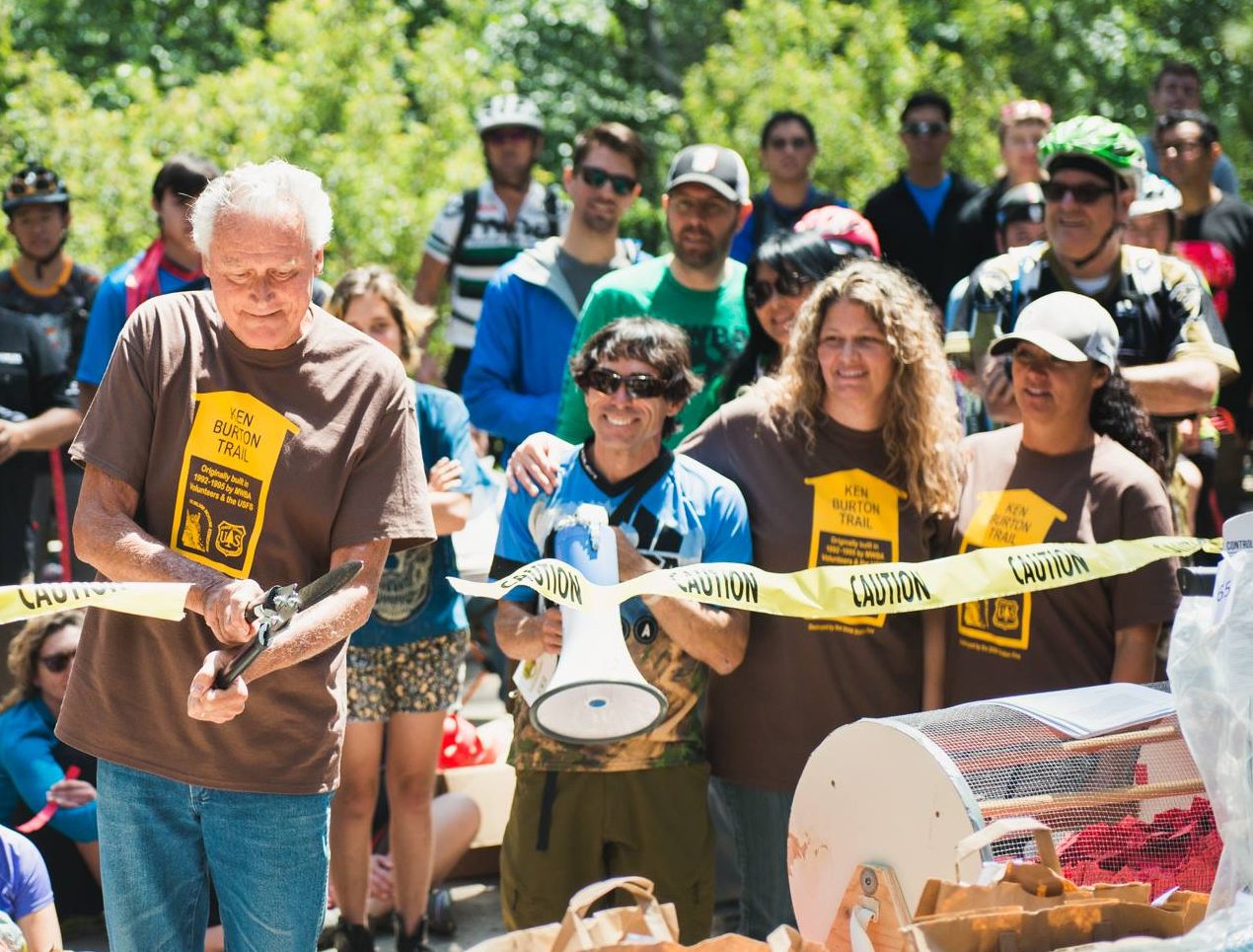
Opening of Ken Burton Trail
In 2016, the Gabrielino Trail Restoration project, with REI, Bellfree Contractors, and Los Angeles Conservation Corps, was completed. Ken Burton Trail restoration with MWBA was completed, opening the Ken Burton trail and a popular loop after seven years of closure, thousands of volunteer hours, and nearly three years of planning.
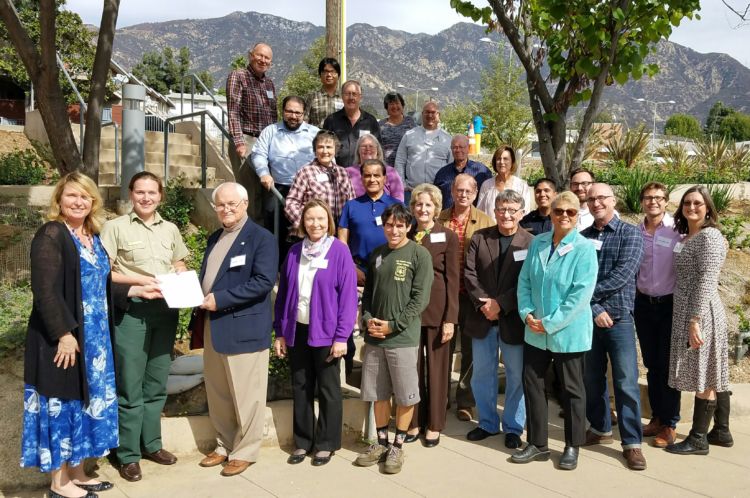
The Community Collaborative hands comments to the Forest Service
Last Thursday, October 27, 2016, the San Gabriel Mountains National Monument Community Collaborative group (Collaborative) finalized their consensus comments on the SGMNM Management Plan. The process was helped immensely by the extension of the public comment period through to today, November 1st.
The Collaborative took a long, hard look at the draft Management Plan, and felt that it fell short of accomplishing everything desired by the community, and mandated by the Presidential Proclamation. I served on the Monument and Transportation Plan Coordinating Committee, tasked with developing comments for the entire Collaborative to review and approve. We broke down the management plan, and assigned sections to those with expertise and interest in the section topics. I helped write the Sustainable Recreation section with the Sierra Club representative, while the Heritage Resources section was initially drafted by an archaeologist. Over the course of two months, numerous conference calls, and four Collaborative meetings, the comments were developed and modified into a document that all members could support.
The Collaborative’s strength comes from the diversity of its membership. When the Collaborative was convened, effort was made to bring in diverse and sometimes opposing viewpoints, including some who did not initially support the Monument. Over the course of nearly two years, Collaborative members have become much more aware of and sensitive to the issues and viewpoints of other members. It’s been a slow process of building trust, and coming up with compromises that support the greater vision for the Monument. The member list is available on the National Forest Foundation’s SGM Community Collaborative page, along with all our meeting records and documents.
The Collaborative code of conduct prohibits any Collaborative member from submitting individual or organization comments that are contradictory to those of the Collaborative. CORBA’s comments supplement the Collaborative comments, addressing a few issues not addressed by the Collaborative. Both are posted here for review.
Nothing in the Management plan directly affects mountain bike access to existing trails. Much of the draft plan and the Collaborative comments concern social and environmental justice, transportation, and heavily impacted areas of the Monument.
The Forest Service expects to release a Final Management Plan next spring, as they read through and respond to all the public comments received. That will be followed by an objection period, then a final Record of Decision. The Presidential Proclamation mandates the completion of the plan by October 10, 2017, the third anniversary of the establishment of the Monument.
Here’s the catch: the public decides how much of that pie each nominated trail will receive. Twelve trails have been nominated, including the recently completed Backbone Trail in the Santa Monica Mountains. The funds will be divided between the twelve nominated trails, based on the percentage of votes each trail receives.
Votes must be cast by November 30th, and you must be at least 21 years of age to visit the site and vote. Every vote makes a difference!
Last Saturday, September 10, about 30 mountain bikers joined 50 or so HandsOn Santa Clarita volunteers to help with Sand Fire cleanup at the Placerita Canyon Nature Center.
The HandsOn crew focused on the west end of the trail and the parkland surrounding the Nature Center. Meanwhile the SCV Trail Users headed up to the more heavily burned area at Walker Ranch campground.
We split up and built eight debris check dams in drainages that lead into the streambed of Placerita Creek. After a fire, soil and ash denuded of vegetation, can become major debris flows with a relatively small amount of rain. These debris flows do more damage to trails than anything else. We saw it in many areas of the Station Fire. I did an interview for Mountain Bike Action magazine, discussing the impacts of fire to trails.
The eight debris check dams will help capture sediment and slow down flows before they cross the trail and enter the canyon. They were constructed of native rock and sand bags filled from the dry streambed, upstream of the check dams.
Thanks to all the volunteers who came out to help, LA County for allowing us to help protect the trail we lobbied for access to, and to the SCV Trail Users for coordinating the effort.
We’re fulfilling our promise of being both responsible trail users, and stewards of our trails and public lands.
Currently mountain bike advocacy is facing one of the the most important long-term issues in our history. The issue is whether mountain bikes should be allowed on trails in Wilderness areas. How mountain bikers and advocacy leaders respond to this can either be polarizing or make us an even stronger voice in the trail user and land stewardship community.
In Idaho Montana, the Wood River Bicycle Coalition, an IMBA chapter, worked with IMBA to build support for a National Monument rather than a Wilderness area. Over a period of several years, negotiations with wilderness advocates, motorized and other recreation groups and elected officials formed a broad coalition of support. However, raw ugly politics ultimately produced a Congressional designation for the Boulder White Clouds Wilderness. This was a painful and well-publicized loss to the mountain biking community. The land protection provisions they had negotiated in good faith to produce a bicycle-friendly National Monument designation were ultimately lost to a crass political maneuver to deny President Obama any semblance of a success. Congress passed a Wilderness bill and the Castle Divide and Ant’s Basin trails were closed to bikes.
Meanwhile, attorney Ted Stroll had been continuing his research into the Wilderness Act, and the congressional debates and intent surrounding that landmark legislation as it was enacted in 1964. He had concluded that the original intent was never to exclude bicycles, as a human-powered form of low-impact recreation, from Wilderness areas. Further research led him to believe that, in accordance with our constitution, we have the right to bring our grievances to the U.S. government. To do this, he formed the Sustainable Trails Coalition (STC), whose sole mission is to pass legislation that would allow local land managers to open trails to bicycles in Wilderness, and to authorize the use of machinery that would allow the most cost-effective and efficient maintenance on Wilderness trails, on a case-by-case, trail-by-trail basis.
How many mountain bikers view the wilderness ban on bikes
The timing of the Idaho defeat brought heightened attention to the STC and their focused, single-issue mission. It cast doubt in the mountain biking community about the effectiveness of IMBA’s approach of building broad partnerships and seeking compromises to both protect bicycle access, while protecting the landscapes through which we ride bikes with a mix of Wilderness boundary adjustments, cherry-stems, and alternative designations. This approach has been highly successful in many instances, but there have been some exceptions, with this loss in Idaho being the most recent and the most publicized.
Condor Peak Trail – Wilderness advocates are still proposing a Condor Peak Wilderness.
Here in the Angeles National Forest, we’ve lost access to much of the backcountry trail network on our Forest. This has placed increased use pressure on non-Wilderness trails by all user groups. Trail maintenance on Wilderness trails has come to a near-halt in many areas, and all user groups are losing those trails to nature. We don’t have any bicycle-legal singletrack options to traverse the San Gabriel Mountains north-south, or east-west, because of numerous closed trails, Wilderness designations, and restrictions on bicycles on the Pacific Crest Trail. Similarly, in the Sierra, Inyo, and Sequoia National Forests there are vast swaths of Wilderness and a few isolated areas that are open to bikes, many of which are currently being evaluated for Wilderness (and, remarkably, the folks who maintain many Wilderness trails and can’t keep up with the workload have objected to any new Wilderness.).
These Wilderness losses are very much a localized issue, affecting California and the Western States disproportionately to other areas. California has the most Wilderness areas of any state, and is second only to Alaska in Wilderness acres. Here in CORBA’s territory, we have the largest population base in the country near a National Forest. 1 in 20 Americans live within easy driving distance of the Angeles National Forest, with its five Wilderness areas and additional Recommended Wilderness taking nearly one third of the Forest.
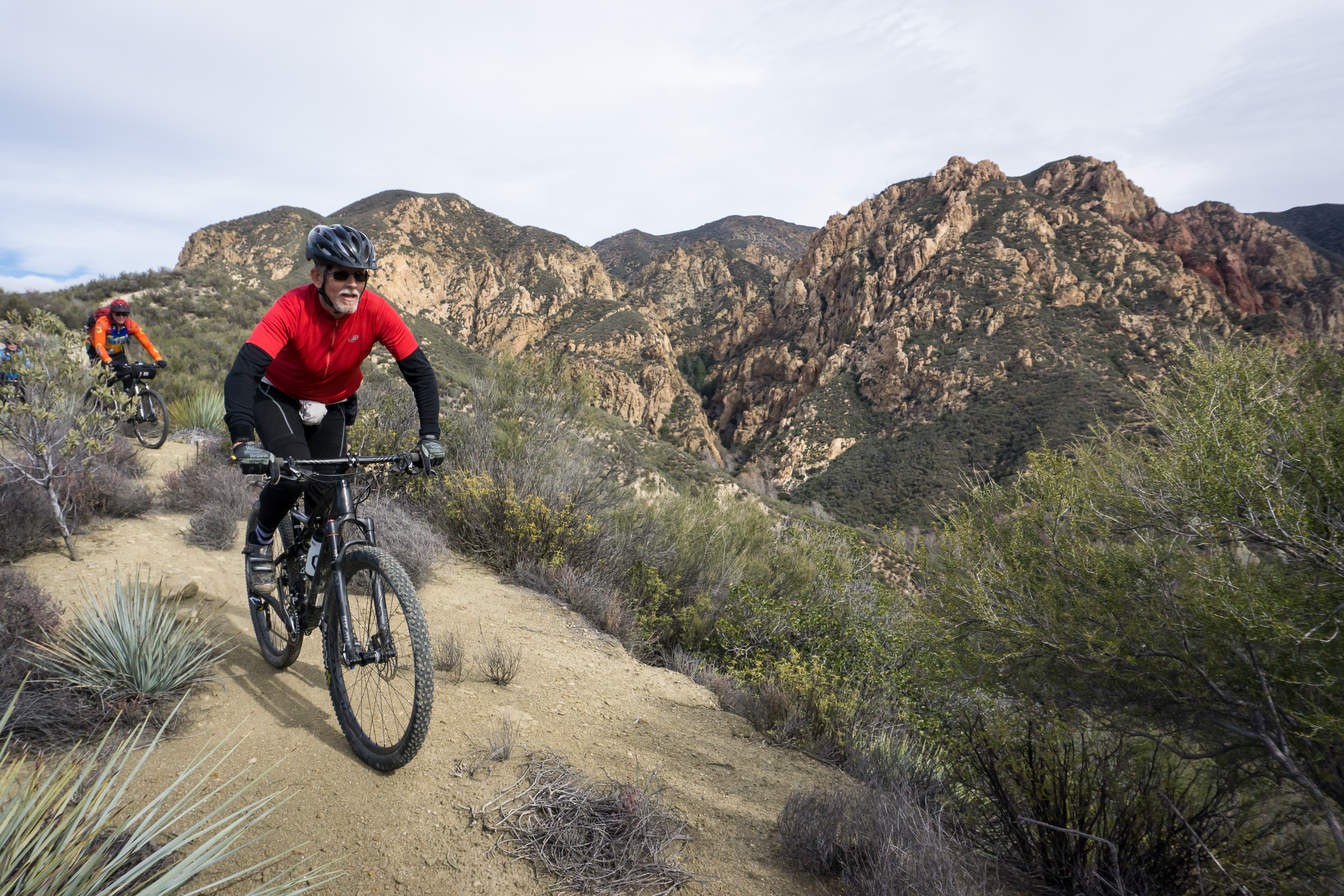
Condor Peak Trail
Recreational activities are greatly reduced in Wilderness areas compared to non-wilderness areas, even if bicycles are left out of the equation. Maintenance efforts are greatly reduced and near-impossible for the Forest Service to schedule, as the cost of manual labor to rebuild trails (no mechanized tools allowed, even wheelbarrows) means these trails often don’t get worked on. While the same can be said of many lesser-used non-wilderness trails, this doesn’t bode well for the future of Wilderness trail recreation.
It also disproportionately affects a smaller subset of the mountain biking community who seek out, relish, and live for backcountry wilderness-type settings that can be experienced by bicycle. It’s why I started mountain biking, and what inspires me to continue exploring and experiencing these majestic landscapes. Sure, I love purpose-built flow trails, downhill trails, and our many favorite local trails. They are needed, but they don’t offer the same experience and escape that some of us live for. We need a broad spectrum of experiences and trail types to cover the many diverse reasons for which people ride mountain bikes, including wilderness-type experiences.
There have been calls for IMBA to take a stronger stand on the Wilderness access issue in print media, the blogosphere, and on social media. In fact, if you have followed closely, the amount of grandstanding on both sides of the bikes in wilderness debate has escalated. From reading some of what has been published, one could easily come away with the assumption that mountain bikers have to pick a side: either support the Sustainable Trails Coalition or support IMBA. Over the past month there have been many calls, emails and forum posts asking to cancel IMBA memberships.
Some writers in the print media have accused IMBA of taking a hardline stance against the STC, but there is much more nuance to their statements that has been overlooked. IMBA hasn’t condemned the STC or opposed their efforts. In fact, IMBA has for many months taken a neutral public policy position toward STC’s strategy, neither supporting nor opposing. Publicly, IMBA has simply stated that the STC approach is not appropriate for IMBA’s mission, given STC’s single focus, uphill battle, risks and uncertain future.
Pressure continues to mount calling for IMBA to support the STC, or at the bare minimum, take a more conciliatory stance and acknowledge the common ground that exist between the two organizations. IMBA have held a press conference explaining their position, posted an FAQ on land protection strategies they will continue to utilize, and conducted four Chapter Leader Executive Briefings with question and answer sessions with approximately 100 chapter leaders nationwide, which I attended. Many forum comments have construed their public arguments and tone as denigrating and dismissive of the STC, but in direct conversations with IMBA staff, that tone is much more nuanced.
With all this attention on Wilderness, one could be misled into thinking that this was the only issue facing mountain bikers. Admittedly, it is probably the most far-reaching issue that could fundamentally change our approach, as mountain bikers, to land protections nationwide, and especially in the Western states like California. But there are still plenty of more immediate issues and opportunities that need immediate, focussed attention, and that is where IMBA has chosen to put its limited resources and energy.
We see this “us vs. them” dichotomy as far from the case. The fact that IMBA has chosen not to support STC does not infringe upon anyone’s first amendment right to speak up for and support the STC, including us as a chapter of IMBA. IMBA’s (and CORBA’s, for that matter) plate is full with current mountain biking issues, and the vast amount of attention and resources needed to achieve the STC’s mission and focus on Wilderness access would hinder our ability to tend to more immediate threats, identify new opportunities, take advantage of current opportunities, and just get things done now.
We believe we need both organizations. STC’s single, focussed mission is to enact legislation that will allow management of wilderness trail access (and mechanized maintenance) to happen at the most local level feasible. STC is not a membership organization and as such is not structured for or able to do anything on the ground right now to open closed trails to bikes or develop and maintain positive relationships with land managers that are key to our future successes. It will be a difficult struggle and take some time before STC’s efforts may prove fruitful.
IMBA chapters are currently doing the vast majority of advocacy and access work at the local levels. If STC is eventually successful in passing their legislation it will likely be IMBA chapters doing the necessary outreach and hands-on work to give the STC’s legislation teeth, by working directly with local land managers to open trails under the authority of STC’s Human Powered Wildlands Travel Management Act of 2016 (HPWTMA).
Despite what has been claimed by the Wilderness Society and others opposed to bicycles in Wilderness, the STC bill doesn’t open ANY trails to bikes or mechanized maintenance. It allows the “most local” land managers feasible (likely district rangers and supervisors) to make those determinations on a case-by-case, trail-by-trail basis. That’s why IMBA chapters will need those strong relationships when and if the time comes.
You can bet the opposition to bikes will only get louder when that happens, both locally and nationally. It will be IMBA chapters with current, strong land manager relations that will be best positioned to follow through on any STC success. Land managers aren’t just going to open trails to bikes in wilderness areas if the STC bill is eventually enacted. If the STC bill does go through–and let’s be clear that we hope it eventually will–IMBA Chapters will need to actively engage with local land managers to open trails to bikes under the newly granted authority of STC’s legislation. Even then, those trail openings will probably require a lengthy NEPA process, and may come with restrictions. Permits, capacity limits, mandatory leave-no-trace classes, or other hurdles could be put in place as a part of that Wilderness access. Passing of the HPWTMA is just the starting point to opening trails in Wilderness.
In the meantime if people start choosing to drop support for IMBA chapters to support the STC, that will impede our ability to get things done now, such as bike parks, trail maintenance, new trails, and being a crucial voice in current land management and trail planning efforts. If CORBA/IMBA is weakened by an attrition of supporters now, it will hinder our ability in the future to build upon any STC success, and open trails currently closed to bikes by Wilderness designations.
One of the best things that STC is doing is bringing more attention to this major access issue. What saddens and frustrates us is that social media are misinterpreting some of IMBA’s responses, and turning this into an “us vs. them” situation, which will weaken our efforts on both fronts. We’d much preferred to have a more conciliatory tone from IMBA towards STC, even in the absence of outright support. IMBA has alienated a portion of their members through their statements and firm stance. That just doesn’t need to be so.
There is room–and a great need–for another group like STC to give the Wilderness issue the razor-sharp focus it will need to see through.
IMBA is a 501c3 and cannot directly lobby our government to introduce new legislation, endorse political candidates, and other restrictions. IMBA (and CORBA) are set up as 501c3 public benefit corporations, that can only influence existing laws and policies through public comments, broad-based partnerships with other organizations, and encouraging our members to speak up with their own comments and letters to elected representatives and land managers.
STC is set up as a 501c4, with the specific purpose of directly lobbying congress and our elected officials to enact change at the legislative level. They are able to do things that IMBA and CORBA cannot. It’s important to note that the Sierra Club is a 501c4, just like the STC. They have a companion 501c3, the Sierra Club Foundation, which collects tax-deductible donations that can then be used to support the lobbying efforts of their 501c4. They also operate under budgets 100 times larger than IMBA’s. Most mountain bikers are decidedly lackadaisical in their approach to advocacy–until their favorite trail is closed, or threatened to be closed. And as previously mentioned, while most mountain bikers support opening some trails in Wilderness to bicycles, the number of riders who may eventually utilize wilderness trails is likely much lower.
The mountain biking community has never had a 501c4 organization to stand behind before the STC came along. Just as the Sierra club leverages both a 501c3 and a 501c4 for various, but related, purposes, the mountain biking community has needed both a 501c3 and a 501c4 voice. As mentioned, where we see things have gone awry is that IMBA’s firm but neutral stance has been twisted and construed in social media and the blog/print media as an “us vs. them” situation.
IMBA’s approach is appropriate for IMBA. The STC approach is appropriate for STC. Together, they have brought more attention to this contentious debate, and hopefully helped engage a new cadre of concerned mountain bikers ready to advocate for continued access to trails–both inside and outside of Wilderness. Both organizations are advocating for increased trail access. They are just employing different strategies and tactics.
Let me re-iterate that in the long run, if STC is successful, strong IMBA chapters will be best positioned to make the changes that STC’s bill will authorize. We’ll then need to leverage our ongoing track record of being good land and trail stewards, and work side-by-side with local land managers to open trails in Wilderness areas. We’ll need to work hard to usher those requests through the NEPA process, and deal with the opposition to bikes that will inevitably emerge. If our voice is weakened by a lack of support now, we’ll be in a more difficult position to ask for trails to be opened under the STC bill’s authority in the future.
If STC is unsuccessful, IMBA chapters like CORBA will continue to work to make a difference, just as we have been doing for more than 29 years. We just hope to have the continued–and even increased– level of support we now get from our members.
But things at IMBA have changed somewhat. Their 2016 advocacy position clearly states that they will continue to fight more aggressively to keep trails open in the face of Wilderness proposals, wherever there are local chapters available to do the local on-the-ground work needed. They have been emboldened to take a firmer stance than ever before to prevent trail closures, within the constraints they operate under as a 501c3. Wilderness and environmental advocates are finding it increasingly difficult to pass Wilderness legislation when advocacy groups like IMBA and its chapters are directly and strongly opposed. IMBA is also investigating the merits of a legal challenge to recent trail access losses in the Bitterroot National Forest in Idaho. They have expressed a desire to legislatively adjust existing Wilderness boundaries to open trails that have been closed to bikes (without any changes to the Wilderness Act itself). But their stance falls short of lobbying for sweeping change at the legislative level, which is precisely what STC is positioned to do.
CORBA and IMBA have on a number of occasions asked for “language-based exemptions” to prohibitions on bikes on specific trails in new Wilderness proposals. We’ve usually been turned down on these requests as being “incompatible with the intent of the Wilderness Act” even though numerous language-based exemptions exist for purposes other than bicycle travel and recreation, and the STC’s contention that the “intent” of the Wilderness Act has been misinterpreted in current regulations. Yet what STC is proposing is making such language-based exemptions (or, more accurately, allowing Forest Service orders to authorize access) for bicycles and trail maintenance, an integral part of an amended Wilderness Act.
Let’s not have this issue divide us, weaken us, and allow us to be conquered. Our members can support both STC and CORBA/IMBA, and both organizations will be stronger for it. While we applaud the STC for their approach, CORBA will continue to work on efforts that have immediate, near-term benefit to all mountain bikers and our public lands: trail maintenance, management plan advocacy, currently pending bills, land manager relations, education, and stewardship.
We also hope that one day, CORBA will be in a position to ask our local land managers to open trails in current Wilderness areas to bikes, under the authority of STC’s legislation. But until then, we have to stay strong, stay united, and keep striving towards making immediate, short-term differences, happy in the knowledge that STC is working on a long-term strategy that most of our members agree would be a step in the right direction for all of us.
On Saturday, February 27, 2016, fifteen dedicated CORBA volunteers came out to support the City of Rancho Palos Verdes efforts to restore the Toyon Trail. Organized by long-time CORBA PV coordinator Troy Braswell, the group took part in trail repairs, invasive weed removal, and planting native shrubs. They worked alongside City employees and other volunteers. Cory Linder, from the City’s Parks & Recreation department was on hand to oversee and coordinate all the volunteer efforts.
The City of RPV has been conducting ongoing restoration work every Saturday in February, with the final work day scheduled for this coming weekend, March 5th. To learn more about volunteer opportunities in Rancho Palos Verdes, visit http://www.rpvca.gov, and stay on top of RPV happenings at CORBA Palos Verdes.
We are happy to see the RPV Parks & Rec department stepping up their volunteer program, and are even happier to be able to contribute. Thanks to all the dedicated volunteers who came out to improve the trails and landscape for everyone!
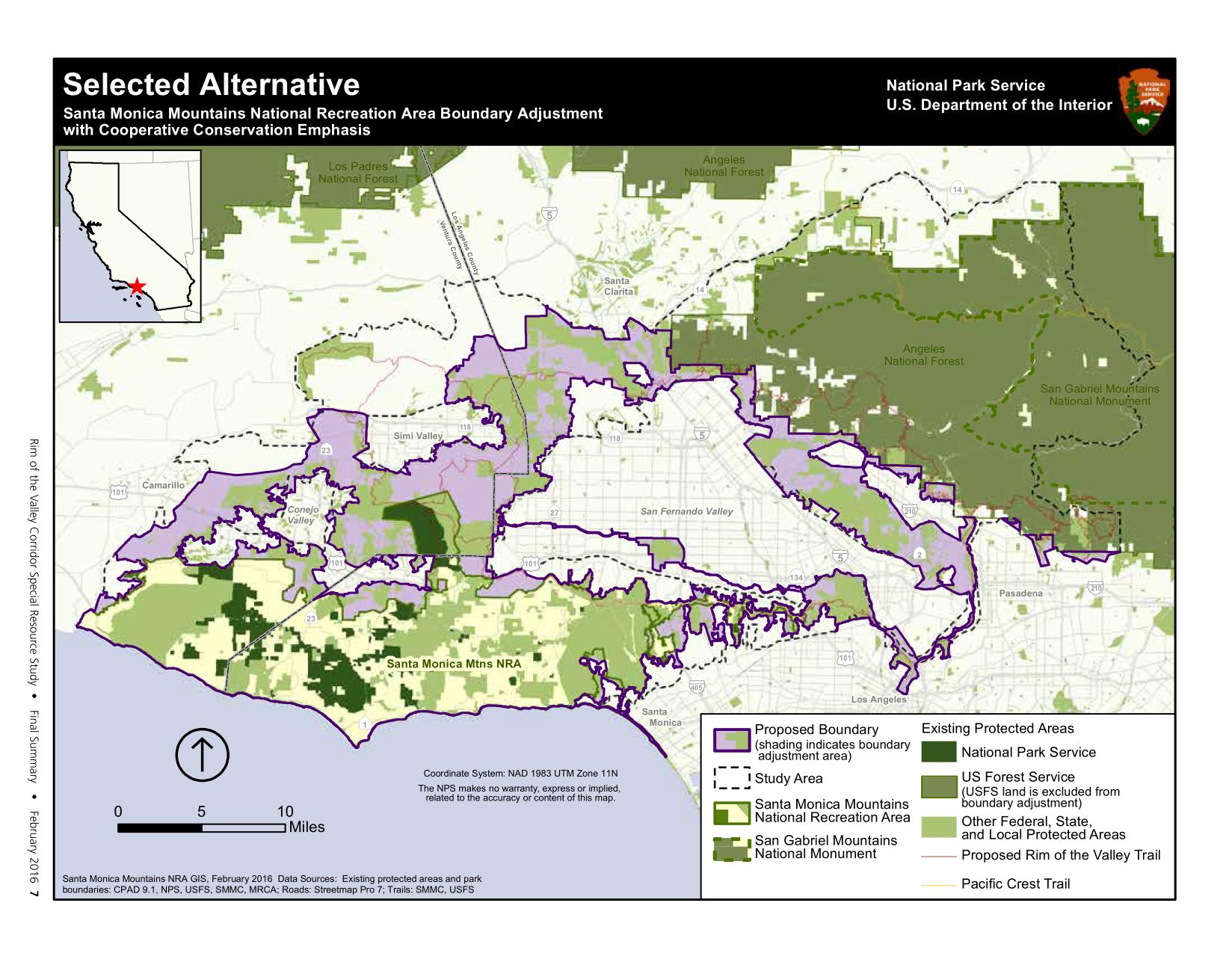
The National Park Service today released the Final Study Recommendations for the Rim of the Valley Corridor Special Resources Study. CORBA has been involved in the Rim of the Valley process since congress authorized the study in 2008, and even before that when the concept was only for a Rim of the Valley trail. We are pleased to see the final recommendation includes most of what we–and many other groups and individuals–suggested in our comments. The recommendation is a hybrid of Alternatives C and D of the draft released last June.
The Secretary of the Interior transmitted the final study to Congress on February 16, 2016. The final study recommends a 170,000-acre addition to Santa Monica Mountains National Recreation Area.The selected alternative would add portions of the Los Angeles River and Arroyo Seco corridors, the Verdugo Mountains-San Rafael Hills, the San Gabriel Mountains foothills, the Simi Hills, the Santa Susana Mountains, and the Conejo Mountain area to the national recreation area. Within the expanded area are: habitat types that contribute to the high biodiversity of the Santa Monica Mountains; functioning wildlife corridors; highly scenic landscapes; historic and archeological sites; geologic and paleontological resources; thousands of acres of open space and recreation areas; and miles of trails, all of which provide exceptional public enjoyment opportunities. Expanding Santa Monica Mountains National Recreation Area would provide new recreational opportunities for one of the most densely populated areas in the United States.
No lands currently managed by the Forest Service (Angeles National Forest and Los Padres National Forest) are included in the proposed boundary expansion of the SMMNRA. However, the National Park Service could partner with the Forest Service on projects, as needed, and as permitted under their current “service first authority.” Existing land managers would continue to manage their lands, but the inclusion of those lands within the expanded boundary of the SMMNRA would allow the NPS to work with them to acquire land from willing sellers, or invest in capitol improvements for recreation or habitat improvements.
The study at this point is just a recommendation from the Secretary of the Interior to Congress. It will be up to congress to take those recommendations and act on them. Or they may not. It many be many years, if ever, before the boundaries of the SMMNRA are adjusted as recommended in the Study.
The final study report, errata from the draft study and an analysis of public comments submitted can be found at http://www.nps.gov/pwro/rimofthevalley/
We have learned that in a couple of weeks, California Conservation Corps Crews under the direction of California State Parks will start brushing the East Topanga Fire Road in Topanga State Park as the first phase of road maintenance this fiscal year. The second phase of project will be re-grading the road to “out slope” the road for more natural drainage of the road. The notice below will be posted on the East Topanga Fire Road to inform the public of the maintenance project. This project is part of large scale project to “out slope” all State Park Fire Roads in the Santa Monica Mountains to reduce sedimentation in the Santa Monica Bay. If you have any questions, please contact Dale Skinner at 310/699-1717.
Today, October 23, 2015, Congresswoman Judy Chu kept a commitment made at the San Gabriel Mountains National Monument One Year Anniversary celebration last week, and revealed to CORBA and MWBA in a meeting a few weeks prior to that. She has introduced House Bill 3820, The San Gabriel Mountains Foothills and Rivers Protection Act.
This act goes to great lengths in protecting existing water, property, utility and infrastructure rights, and expressly prohibits the use of Eminent Domain to acquire property. It establishes an Advisory Committee under the Federal Advisory Committee Act (FACA), which includes water agencies, infrastructure, local governments, conservancies, environmentalists, recreation including OHV, and other stakeholders. It doesn’t, however, specifically mention bicycles. It also establishes a partnership committee to support the NRA.
The bill authorizes the National Park Service to establish the San Gabriel National Recreation Area as a new unit of the NPS. It allows them to enter into partnerships and collaborate with existing and willing land managers with the proposed boundary. This includes the Army Corps of Engineers who own and operate much of the flood control infrastructure along the river. It permits and encourages collaborations and partnerships to be leveraged to improve habitat, recreation, resource protection, water quality, infrastructure or any of the purposes for which the NRA will be established ( as specified in Section 102(A) of the bill). The NPS can only acquire land from willing sellers and enter into partnership with willing entities, agencies, and nonprofits. Despite claims to the contrary, this is not a “land grab.”
The bill gives the National Park Service three years to develop a management plan and a visitor services plan, in conjunction with the Advisory Committee (and as required by NEPA, the public). There are however two words that appear highly subjective. In Section 108 (a)(3)(B) In the development of a Visitor Services Plan, the Secretary Shall consider the demand for various types of recreation (including hiking, picnicking, horseback riding, and the use of motorized and mechanized vehicles) where permissible and appropriate; [Emphasis added]. The word “appropriate” in this context is too subjective, without any reference to who makes the determination for appropriateness, and by what criteria. We know there are many who deem bicycles inappropriate anywhere, and we would hope that any determination of appropriateness of bicycles or any other form of recreation be transparent and include public involvement beyond the Advisory Committee and Partnership.
Also required is the establishment of the San Gabriel National Recreation Partnership, consisting of the many land managers, utility managers, and local governments within the boundary. The partnership includes “One designee of San Gabriel Mountains National Monument Community.” We wonder if this is a referral to the Community Collaborative, on which CORBA President Steve Messer serves to represent bicycle recreation interests.
That original SGWMSR Study and the Alternative D supported by CORBA included most of the San Gabriel Watershed within the Angeles National Forest. This study concluded in in 2011, and was the precursor to our National Monument. In early 2014, Chu introduced legislation to establish a National Recreation Area in accordance with the study, but it was clear it was not going to make it out of committee in the congressional climate at that time. This urged her and other advocates to seek alternative protection for the San Gabriel Watershed, ie. to have President Obama declare a San Gabriel Mountains National Monument (SGMNM), which included all of the San Gabriel Watershed, and then some.
One of our concerns with Alternative D of the SGWSRS was how it was going to be funded. At the time, in 2011, the Nation’s economy was in a much sorrier state than it is today, so the financial and administrative burdens a new NPS unit would create were, and still remain a concern. While we are doing better economically, we all know that our public land agencies are all dealing with reduced budgets and severe cutbacks over the past decades. As we commented in 2011, we would hope that funding be secured from additional sources that do not impact or reduce the budgets of other NPS or USFS units, including our local Santa Monica Mountains National Recreation Area and Angeles National Forest/San Gabriel Mountains National Monument.
Another concern we had with the SGWMSRS was that Forest Service land outside the San Gabriel Watershed Study area under Alternative D would receive reduced services and resources from the Forest Service. We didn’t want to see all the priorities going to the National Recreation Area. Much of the area left out of the National Monument was not in the original San Gabriel Watershed Special Resource Study, which some have speculated is a reason for the exclusion from the National Monument. With our SGMNM, we have the same concerns: that areas outside the Monument under Forest Service control would be the forgotten stepchild of the National Monument. While much attention is being placed on the National Monument, we are also seeing benefits to the rest of the Forest.
Chu’s legislation aims to correct the omission of those Forest Service lands from the SGMNM. Title 2 of HR3820 appears to expand the boundary of the existing SGMNM to include all of the Angeles National Forest south of the 14 and east of the 5. It makes no other claims and places no additional burdens on the Forest Service with respect to additional time to prepare a Management Plan. We are beginning to see the impacts of the additional funding the National Monument designation has brought to the Angeles National Forest. Thus far, we see it as good for the Forest. While we do have concerns that when and if the current bill is enacted, the Monument Management plan currently in development will need to be revised once again. Chu’s bill simply applies whatever existing National Monument management plan is in place or in development to the expanded Monument. While sounding simple in theory, the burden of changing boundaries and evaluating the additional cultural, historical, ecological and recreational resources within the expansion will take additional time.
The expansion of the existing National Monument in HR3820 already has much support within the community. Tim Brick from the Arroyo Seco Foundation has been especially vocal about his disappointment with the way the current National Monument boundaries were drawn, and that it happened without any public process or explanation of the reasoning. His feelings are widely echoed in the community, especially now that we are seeing additional funds being allocated to the Forest Service since the National Monument designation.
Our initial thoughts on the bill are positive but guarded; we need more time to digest the content of the bill and its long-term ramifications. Its intentions are in line with those of CORBA’s mission: enhancing recreation, and protecting the lands on which we recreate. If you have strong feelings about the bill please let us know as we formulate our official position.
Map of the proposed San Gabriel National Recreation Area and San Gabriel Mountains National Monument Expansion:
With proposed developments at Tapia Canyon and our pending proposal for a bike park at Castaic Lake State Recreation Area, there are some changes coming to trails and bike access in the Castaic Area. We’ve long known that the trails of Tapia Canyon, in particular, would be at risk once the developers move forward with their construction plans. We’ve had several meetings with the developers who seem willing to work with us to preserve some trails in the area.
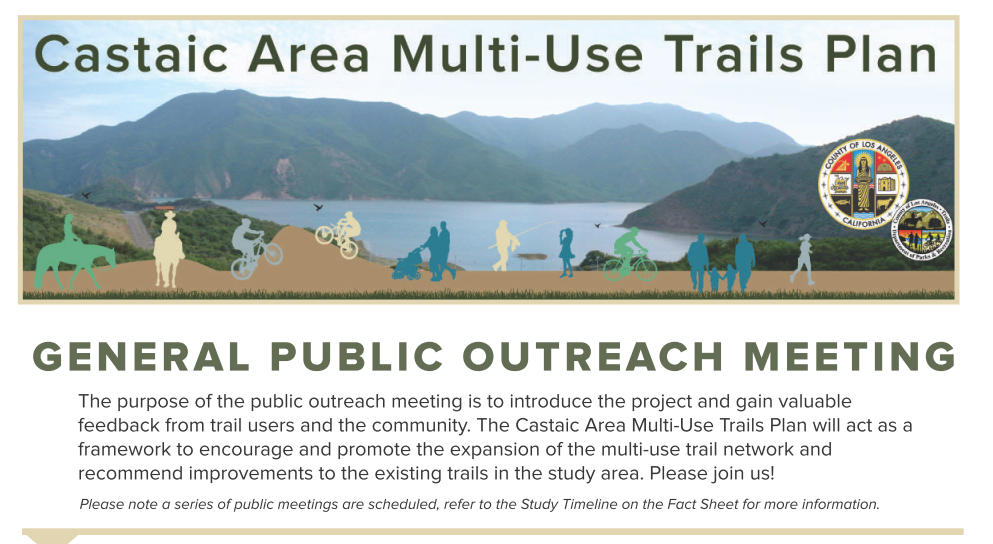
In response to the public’s need for future planning, 5th District Supervisor Michael Antonovich has authorized the development of the Castaic Area Multi-Use Trail Plan. The County will survey existing trails, proposed developments, desired trail connections, and gauge future trail needs to support a growing population. This will be a similar process to the Santa Susana Mountains Trail Master Plan, a process in which we participated from April 2012 until it’s completion last year.
The first general public meeting is scheduled for Thursday, August 20th at 6:30 p.m., at the Los Angeles County Castaic Public Library, 27971 Sloan Canyon Road, Val Verde, CA 91384. This meeting will be followed by three user-group specific meetings for mountain bikers, equestrians, and hikers. Currently the mountain bikers’ meeting conflicts with Interbike, so we have asked if that can be rescheduled.
Last year CORBA submitted a comprehensive Bike Park proposal for the Grasshopper Canyon area of Castaic Lake State Recreation Area which we would like to see included in this planning process.
If you’re able to, come to this meeting and express your support for our bike park proposal, for preserving existing multi-use trails, and for creating new trail opportunities, such as the conceptual “Castaic Loop Trail.”